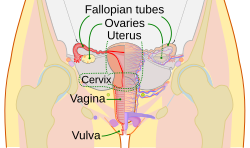
ovary
- these two ovoid ovaries produces eggs and female sex hormones such as oestrogen and progesterone. the female sex hormones are responsible for the development and maintenance of the secondary sexual characteristics in females.
- when the eggs become mature, they are released from ovaries.
Oviduct
- each ovary releases mature eggs into an oviduct or fallopian tube.
-each oviduct is a narrow muscular tube leading from the ovary to the uterus. it had=s a funnel-like opening lying close to the ovary, making it easier for the egg to enter the oviduct.
the egg is usually fertilised in the oviduct.
uterus
-the womb or uterus (plural : uteri) is where the foetus or unborn baby develops during pregnancy.
- the uterus is shaped like an upside-down pear. it has elastic muscular walls. the smooth muscle tissue in the walls of the uterus contract to push the foetus out during birth.
- the soft, smooth inner lining of the uterus is called the uterine lining or endometrium. it plays a part in the embryo implantation. every month, the endometrium is broken down and it flows out of the body together with some blood. it is later built up again.
cervix
-the circular ring of muscles at the lower narrow end of the uterus is the cervix. it enlarges to allow passage of the foetus during birth.
vagina
-leading from the cervix to the birth canal or vagina. the opening of the vagina is the vulva.
semen is deposited in the vagina during mating or sexual intercourse.

No comments:
Post a Comment